I have always been fascinated by plants.
They are little chemical factories that produce the food we eat, the calories we burn, and many of the medicines that save our lives. Without them there would be no life on Earth. Yet most people walk past them with barely a glance.
It has always surprised me that others are not as excited by them as I am.
I still remember being a small child in kindergarten, germinating a wheat seed in an egg carton. Watching that tiny seed come to life felt like magic. More than fifty years later, I have not changed my mind.
There was a time when I aspired to having a neat, carefully designed garden that would impress visitors. The problem was that I am not a naturally tidy person, and that extends to my gardening. Even though I never quite managed to create the formal garden I imagined, I still loved being amongst the plants and watching things grow.
In the end I stopped fighting my nature.
Rather than growing ornamental plants, I started growing productive ones.
Over time I removed many of the plants that served no purpose, particularly those that were not native, and replaced them with trees and shrubs that could contribute something. There are few things I enjoy more than sitting in the garden with my chickens and picking a lemonade fruit from one of the citrus trees to eat on the spot.
When I discovered distilling, I became fascinated by a new question.
Which plants had flavours that could survive a journey through a still?
I loved the idea that the essence of a plant could be preserved through distillation.
During those early years I read a book called The Terroir of Whisky.
I was already familiar with the idea of terroir. Years earlier I had visited a vineyard in Queensland’s Granite Belt. The owner poured me two wines made from the same grape variety and using the same winemaking process.
The only difference was where the grapes were grown.
One block faced one direction. The other faced another.
The wines tasted completely different.
Small differences in sunlight, soil, temperature, moisture and exposure had produced two distinct wines.
I found that remarkable.
When I later read about terroir in whisky, I wondered whether the same thing could be true in distilled spirits. In whisky I remain unconvinced. So much of whisky’s final character comes from the barrel that it can be difficult to separate the influence of place from the influence of oak.
Gin, however, feels different.
When vapour passes through the botanicals in a gin basket it carries with it essential oils from those plants. The quality, strength and character of those oils vary from season to season and from place to place.
I see this in my own garden.
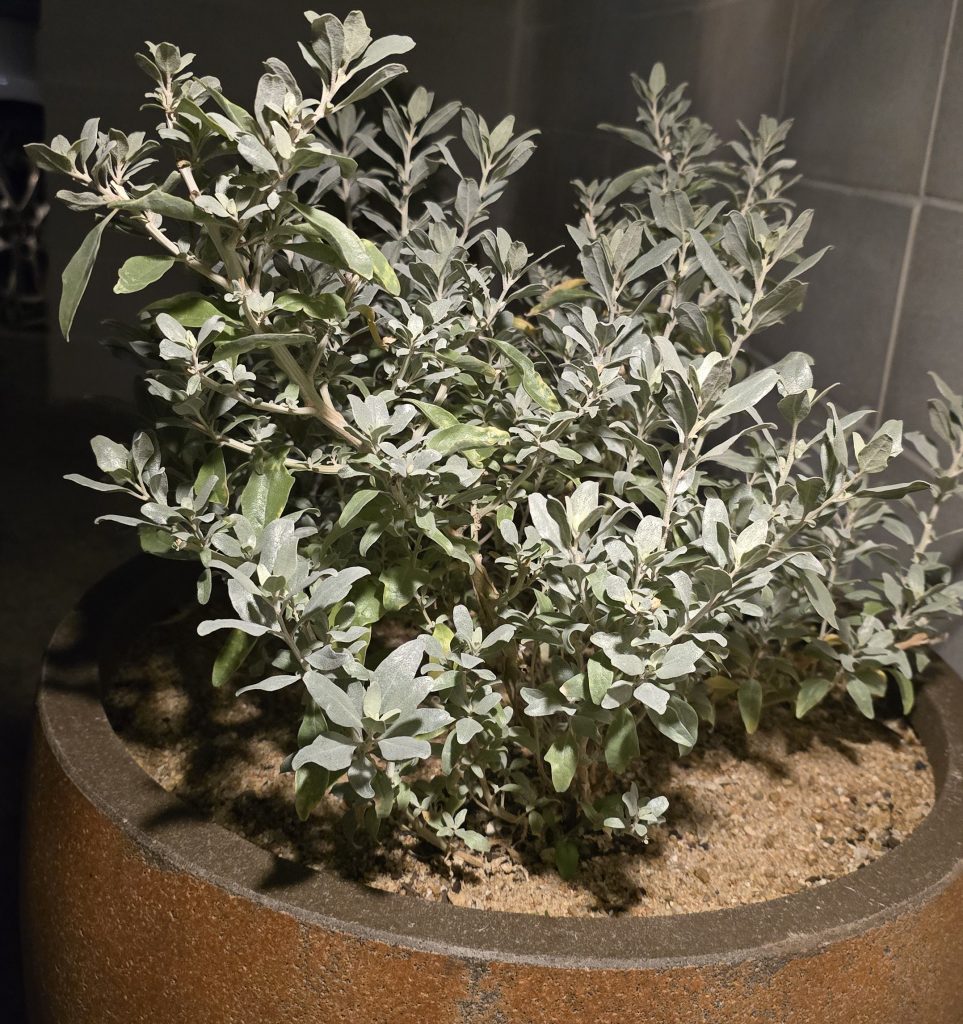
For my Umami Gin I grow saltbush in pots at the distillery. I never water it. Saltbush loves hardship. When the weather is dry the leaves accumulate more salt and more of the compounds that mimic saltiness. After periods of heavy rain the character changes noticeably.
I have observed similar things with pandan and vanilla grass. The same plant can behave differently depending on where it is grown and how it is treated.
Can I prove that every visitor would notice these differences?
Probably not.
But I notice them.
I also believe I can taste the difference between a gin made with fresh botanicals and one made entirely from dried ingredients.
That is not to say dried botanicals are inferior. Many are essential. Drying can intensify flavour, improve consistency and create structure within a gin.
Fresh botanicals play a different role.
They often provide brightness, energy and lift.
The dried botanicals provide the skeleton. The fresh botanicals provide some of the life.
Of course not every gin aims for freshness. There is very little that is “fresh” about olive leaf, seaweed or macadamia when they appear in my Umami Gin. They are there to provide depth, savouriness and complexity. Yet even there, the fresh saltbush contributes something important to the balance.
Whether the effect is physical, psychological or somewhere in between, I like the idea that a spirit can remain connected to the place where it was made.
That is one reason I continue to grow botanicals at the distillery itself. My main garden is in Buderim, but I grow olive, saltbush and mint in pots at the distillery in Maroochydore.
Perhaps only a tiny part of their character finds its way into the bottle.
Perhaps the contribution is as much story as flavour.
Either way, I like knowing that when someone takes a bottle home, they are taking a small piece of a real place with them.